Las Vegas, the glittering Entertainment Capital of the World, is known for its vibrant nightlife, world-class shows, and endless excitement. But beneath the neon lights and bustling casinos lies a sobering reality: trauma incidents happen more frequently than many realize. Whether it’s a tragic accident on the Strip, a domestic dispute in a suburban neighborhood, or an unfortunate event in a high-rise hotel, these occurrences leave lasting impacts on individuals and communities alike.
As a leading provider of professional cleanup services, Las Vegas Trauma Cleanup understands the emotional and physical toll these events take. In this blog post, we’ll dive into the top 7 statistics on trauma incidents in the Las Vegas area, shedding light on the prevalence and urgency of proper response. Armed with this knowledge, you’ll be better equipped to handle such situations or know when to call in experts. Let’s explore these figures and what they mean for our city.
Understanding Trauma Incidents in Las Vegas
Trauma incidents encompass a range of events, including violent crimes, suicides, unattended deaths, and severe accidents. In a city that attracts over 42 million visitors annually, the population density and 24/7 activity amplify the risks. According to local law enforcement and health reports, Las Vegas sees a disproportionate number of these cases compared to quieter regions.
Why Las Vegas is Particularly Vulnerable
The unique blend of tourism, economic pressures, and urban sprawl contributes to higher incident rates. For instance, the Clark County Coroner’s Office handles thousands of cases yearly, many stemming from the fast-paced lifestyle. Understanding these stats isn’t just about numbers—it’s about preparedness and community safety.
The Top 7 Statistics on Trauma Incidents
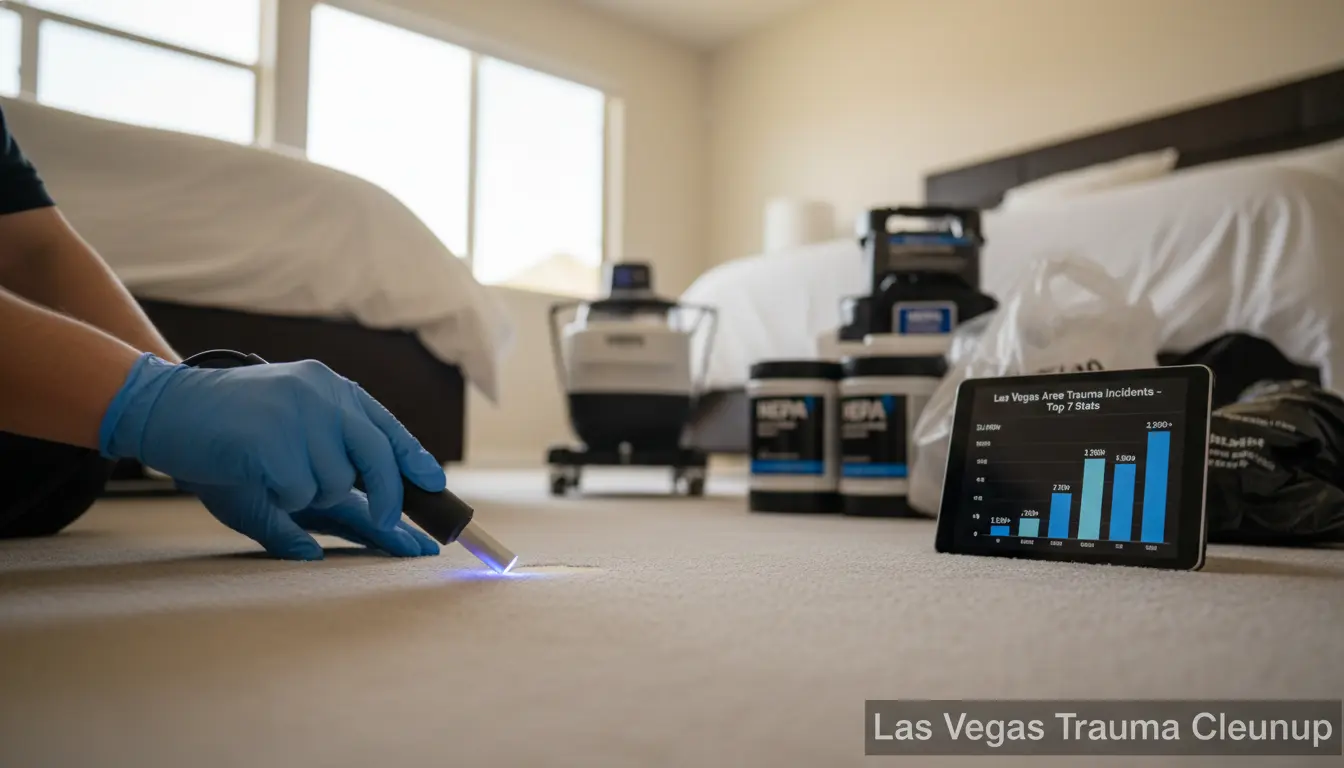
Drawing from reliable sources like the Las Vegas Metropolitan Police Department (LVMPD), Centers for Disease Control and Prevention (CDC), and local health departments, here are the most compelling statistics. These highlight the scale of the issue and underscore the need for specialized services like property trauma restoration.
1. High Rate of Violent Crimes
Las Vegas reports over 25,000 violent crimes annually, according to LVMPD data from recent years. This includes assaults and homicides, with the Strip alone accounting for a significant portion due to crowded venues. In 2022, the city saw a 10% uptick in such incidents, often leaving biohazardous scenes that require immediate attention.
Practical Tip: If you’re a property owner in high-traffic areas like Henderson, install better lighting and security cameras to deter potential threats. Always prioritize safety protocols to minimize risks.
2. Suicide Statistics in Nevada
Nevada ranks among the top states for suicide rates, with Las Vegas contributing heavily. The CDC reports approximately 700 suicides statewide each year, many in urban Clark County. Hotels and apartments in areas like Peccole Ranch are common sites, where discreet handling is crucial.
Actionable Advice: Recognize warning signs such as isolation or substance abuse. For cleanup, opt for discreet trauma services to maintain privacy and restore normalcy without drawing attention.
3. Unattended Deaths and Elderly Incidents
With an aging population, unattended deaths—where someone passes away alone and isn’t discovered for days—number around 1,500 in Clark County annually. This statistic from the coroner’s office emphasizes the need for prompt decomposition cleanup to prevent health hazards.
Local Reference: In retirement-heavy neighborhoods like Anthem, community wellness checks can help. If faced with such a situation, contact professionals for biohazard waste removal to ensure safe disposal.
4. Traffic Accident Fatalities
The Nevada Department of Transportation logs over 300 fatal crashes yearly in the Las Vegas Valley, many involving pedestrians on busy roads like Las Vegas Boulevard. Alcohol-related incidents spike during events like the Las Vegas Grand Prix, leaving traumatic scenes on highways and streets.
Practical Tip: Drivers in Whitney should adhere to speed limits and avoid distractions. For post-accident cleanup, especially involving bodily fluids, rely on certified teams to handle medical waste disposal.
5. Domestic Violence Cases
LVMPD responds to over 15,000 domestic violence calls each year, with many escalating to traumatic levels. Suburbs and apartment complexes see a rise, particularly during economic hardships affecting casino workers.
Actionable Advice: Seek support from local shelters and hotlines. Property managers should prepare emergency response plans, including swift odor elimination services to eradicate lingering smells and bacteria.
6. Overdose and Drug-Related Incidents
With the opioid crisis raging, Las Vegas records about 1,000 overdose deaths annually, per health department stats. Motels and public spaces in downtown areas are hotspots, often requiring hazmat-level cleanup.
Local Reference: Initiatives in areas like the Arts District aim to combat this, but incidents persist. Educate yourself on naloxone use and ensure properties have access to professional remediation.
7. Homicide Rates in Tourist Areas
Despite a dip post-pandemic, homicides in Las Vegas hover around 150 per year, with 20% occurring in tourist zones. The 2023 data shows spikes near casinos, highlighting the contrast between glamour and grit.
Practical Tip: Visitors and residents should stay vigilant. For aftermath management, especially in commercial spaces, professional intervention prevents long-term property damage.
Practical Tips for Handling Trauma Incidents
Facing a trauma incident can be overwhelming, but preparation helps. First, secure the area and call 911 immediately. Avoid touching anything to prevent contamination. Document the scene for insurance if applicable.
For cleanup, never attempt DIY—biohazards like bloodborne pathogens pose serious risks. Instead, hire certified experts who follow OSHA guidelines. In Las Vegas, where heat accelerates decomposition, time is critical; odors can permeate quickly, necessitating advanced odor elimination services.
Actionable Steps:
- Evacuate non-essential personnel.
- Use protective gear if entry is unavoidable.
- Contact Las Vegas Trauma Cleanup at (702) 602-9635 for 24/7 response.
- Follow up with mental health support resources like the National Alliance on Mental Illness (NAMI) Southern Nevada chapter.
Local businesses in Aliante can integrate these tips into safety training, fostering a resilient community.
FAQ: Common Questions About Trauma Incidents in Las Vegas
What Should I Do Immediately After a Trauma Incident?
Secure the scene, call emergency services, and avoid the area. Professional cleanup is essential to handle biohazards safely—reach out to Las Vegas Trauma Cleanup for guidance.
How Long Does Trauma Cleanup Take in Las Vegas?
It varies by severity, but most residential jobs take 4-8 hours. Commercial sites like those on the Strip may require 1-2 days, including disinfection and restoration.
Is Trauma Cleanup Covered by Insurance in Nevada?
Often yes, under homeowner’s or property policies for biohazard events. We assist with claims; contact us at (702) 602-9635 to discuss your situation.
Why Choose Professional Services Over DIY in Las Vegas?
DIY risks health exposure and legal issues due to improper disposal. Our team uses EPA-approved methods tailored to Nevada’s regulations, ensuring thorough, discreet results.
Are There Specific Regulations for Trauma Cleanup in Clark County?
Yes, compliance with state biohazard laws is mandatory. Licensed providers like us handle permits and waste transport to avoid fines.
Conclusion: Stay Prepared and Protected in Las Vegas
The top 7 statistics on trauma incidents reveal the hidden challenges of living and visiting Las Vegas—a city of highs and, unfortunately, some lows. From violent crimes to unattended deaths, these events remind us of the importance of vigilance, community support, and professional intervention.
At Las Vegas Trauma Cleanup, we’re committed to restoring safety and serenity to your space with compassion and expertise. Whether you’re in Henderson or downtown, our team is ready to assist 24/7. Don’t let trauma linger—call us today at (702) 602-9635 for a confidential consultation and reclaim your peace of mind.